
Dr Francis Balestra is Director of Research at CNRS and Director Emeritus of the SiNANO Institute both organisations being partners in the INPACE initiative. Dr Francis Balestra is organising a workshop on semiconductors during the 2nd EU-Japan Digital Week 2026 in Tokyo on March 24-25 at the School of Engineering, University of Tokyo: “Semiconductor Workshop: Japan-EU Cooperation on Advanced Computing, Advanced Functionalities and Semiconductor Value Chain”. We asked Dr Balestra why semiconductors are a strategic priority at a Member State level and how the INPACE initiative helps facilitate dialogue and collaboration in this field. Dr Balestra is leading INPACE Cluster 4 which is dedicated to “Enabling technologies – Chips for the future,” in alignment with the priorities set out in the EU–Japan Digital Partnerships.
What are semiconductors?
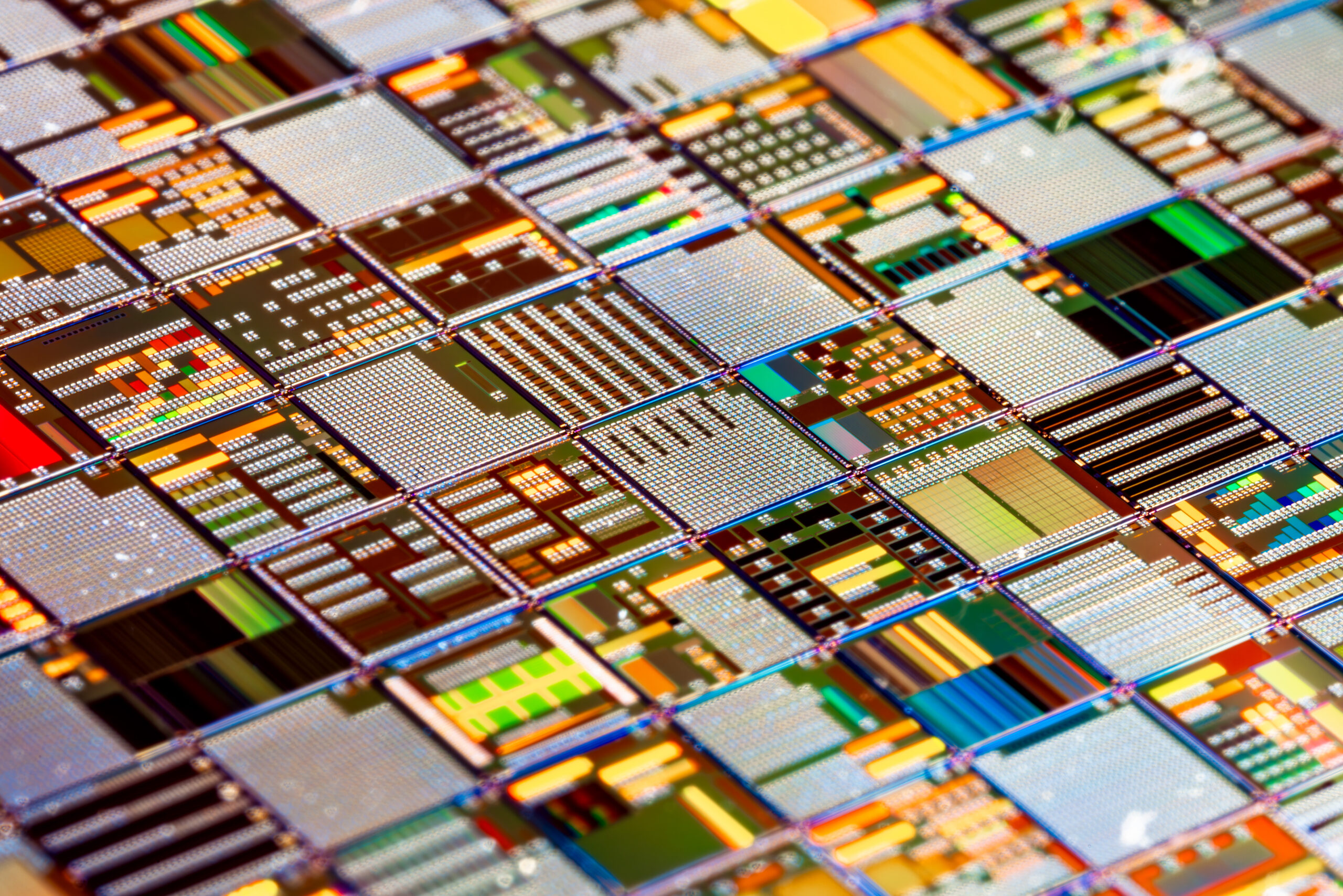
Semiconductors are materials, most commonly silicon, that can control the flow of electricity. That special property lets them act as switches, amplifiers, and processors of information. In practice, semiconductors are the foundation of chips used in almost every modern technology:
- Smartphones, computers, and data centres
- Cars (especially electric vehicles and autonomous systems)
- Industrial automation and robotics
- Medical devices
- Energy systems and smart grids
- Defence, space, and critical infrastructure
We often hear that at Member State (and EU) level, semiconductors are not just a technology topic, they are a strategic, economic, and security priority. But why is that?
Without semiconductors, there is no digital economy. They are the “brains” and “nervous system” of modern society.
Dr Francis Balestra
Economic competitiveness and industrial leadership
Semiconductors sit at the heart of high-value industrial ecosystems such as automotive, aerospace, telecommunications, AI, and advanced manufacturing. For Member States, having strong semiconductor capabilities means:
- Supporting national industries and jobs
- Attracting investment and high-tech manufacturing
- Maintaining global competitiveness in key sectors
Countries that fall behind in chips risk falling behind across entire industrial value chains.
Strategic autonomy and supply-chain resilience
Recent global chip shortages exposed how fragile and concentrated semiconductor supply chains are.
At Member State level, this translates into:
- Reducing dependence on a small number of non-EU suppliers
- Ensuring continuity for critical sectors (health, energy, transport, defence)
- Strengthening resilience against geopolitical tensions and trade disruptions
This is why semiconductors are central to EU-wide initiatives and national strategies.
Digital and green transitions
Semiconductors are enablers of both:
- The digital transition (AI, cloud, high-performance computing, quantum technologies)
- The green transition (energy-efficient electronics, power devices, smart grids, electric mobility)
Member States rely on advanced chips to meet climate targets while scaling digital services in a sustainable way.
Innovation, research, and skills
Semiconductors are among the most R&D-intensive technologies in the world.
For Member States, investing in chips means:
- Strengthening national research ecosystems and universities
- Developing advanced skills and talent pipelines
- Supporting innovation across multiple sectors, not just electronics
Public investment often acts as a catalyst for private-sector innovation.
Security, defence, and critical infrastructure
Many defence systems, secure communications, and critical infrastructures depend on trusted and reliable chips.
At Member State level, this raises concerns about:
- Technology security and trust
- Control over sensitive technologies
- Protection against supply disruptions or malicious interference
Join the EU–Japan Semiconductor Dialogue in 2026
To further strengthen cooperation on this strategic topic, stakeholders from government, industry, research, and academia are invited to take part in the Semiconductor Workshop “Japan-EU Cooperation on Advanced Computing & Functionalities, Heterogeneous Integration and Semiconductor Value Chain”, to be held on 24-25 March 2026 during the 2nd EU-Japan Digital Week at the School of Engineering, University of Tokyo
The workshop will feature presentations and discussions addressing major challenges in the semiconductor sector, including the complexity of the value chain, growing computing and storage demands, novel functionalities for electronic systems, circuit and system integration, energy and material requirements, and reliability. It will also explore potential technological solutions, with particular emphasis on reducing energy and material consumption for sustainable electronic systems; advanced logic devices and materials; integration of new functionalities for future systems (such as smart sensing, energy harvesting for autonomous systems, and cryoelectronics for quantum engineering); heterogeneous 3D integration and advanced packaging to enable high performance, low power consumption, low latency, miniaturisation, functional integration, and cost reduction; and opportunities for cooperation to address gaps in the semiconductor value chain.
Save the date and engage in shaping the future of semiconductors through EU–Japan collaboration.
 English
  Japanese