
The 2nd EU–Japan Digital Week 2026, held in Tokyo from March 24–30, marked a turning point in EU–Indo-Pacific digital cooperation. Moving beyond policy dialogue, the event highlighted the urgent need for concrete implementation across key areas such as interoperability, semiconductors, AI, and digital governance. Organised by the INPACE initiative and the EU delegation in Japan, the week-long event under offered dedicated sessions to discuss groundbreaking technologies and their applications:
Hackathon on Interoperability of Digital Public Infrastructure
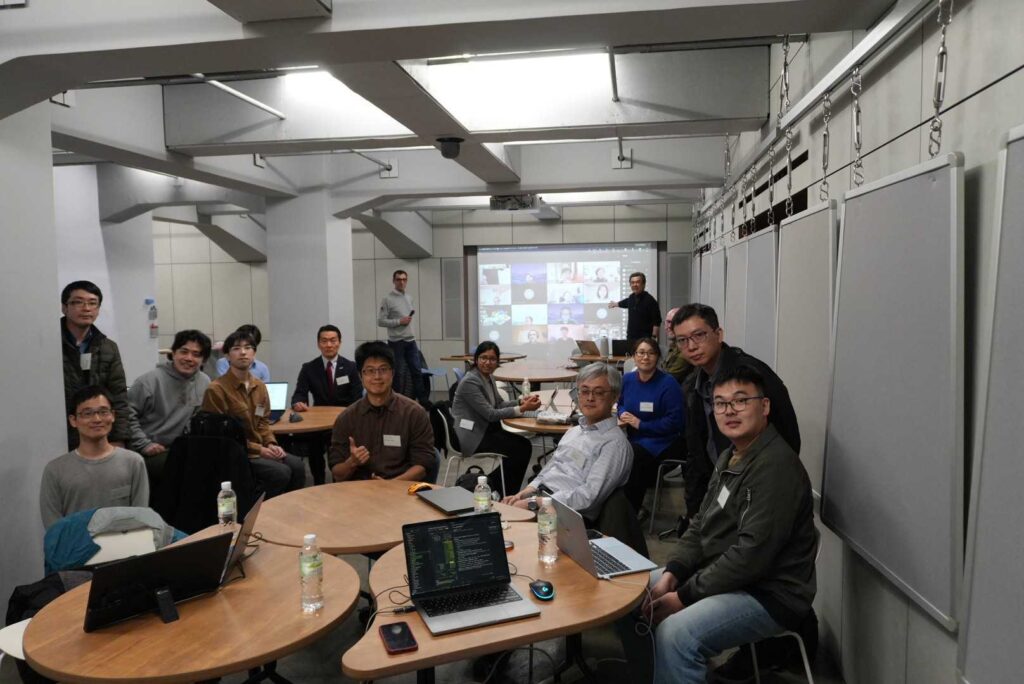
A key takeaway is that interoperability between EU and Indo-Pacific digital infrastructures is no longer a research question. It is an implementation and governance challenge. The primary barriers now lie not in technical feasibility but in the absence of shared certification frameworks, harmonised trust registries, and sustained multi-stakeholder coordination mechanisms spanning both regions. Addressing these gaps requires moving from event-driven collaboration to a permanent, institutionally anchored cooperation structure. For the EU-Japan Digital Partnership and the broader Indo-Pacific digital agenda, the recommended next steps are to create dedicated pathways for winning prototypes to enter public procurement and standards development processes, and to systematically involve ETSI, IPA Japan, and other standards bodies – as represented in the final jury – in translating prototype learnings into normative outputs. The winning team presenting at the INPACE final event in Brussels in 2027 represents a concrete first step in that direction.
Semiconductor Workshop: “Japan-EU Cooperation on Advanced Computing, Advanced Functionalities and Semiconductor Value Chain”
A number of interesting thematic overlaps and areas of complementarity have been identified, both in terms of the strengths of the semiconductor value chain and in terms of technology. For example, Japan’s strengths in the fields of memory, materials, back-end equipment and integration are of great interest to the EU. INPACE partners will continue to strengthen cooperation between the EU and Japan at upcoming events organised by the INPACE and JASMINE initatives. It would also be possible to propose joint projects under Horizon Europe and the Chips Joint Undertaking. The United States and China aim to cover the entire semiconductor value chain in the future, with around 400 billion in investment in each country. However, this is not feasible for Europe and Japan, and this bilateral collaboration would help overcome the many challenges associated with future electronic systems, a century after the invention of the transistor.
Policy Workshop: “Securing the Digital Horizon: EU-Japan Cooperation on “Emerging Disruptive Technologies and Critical Infrastructure”
During the first session, “From Innovation to Deterrence: Dual-Use Technologies, Defence, and Economic Security,” participants noted that the primary challenge is not innovation itself, but absorption. Namely, how effectively public institutions, procurement bodies, and defence organisations integrate dual-use technologies into operational use. Institutional inertia remains a significant obstacle. In Japan’s defence R&D landscape, a cultural inclination toward incremental progress and risk aversion constrains the development of truly disruptive solutions. Scalability—especially in domains such as drones and autonomous systems—was identified as a persistent weakness, compounded by the absence of an ambitious requirements-setting process, for example.
In the second session, “Securing the High Ground: Space and Critical Infrastructure for Defence and Trusted Connectivity,” recommendations focused on deepening EU–Japan cooperation. In space situational and domain awareness (SSA/SDA), participants emphasised the need to move beyond basic information sharing toward integrated data fusion, timely attribution mechanisms, and joint operational picture capabilities. In cybersecurity and resilience for space assets and operations, building on models such as ETSI and 3GPP was seen as key to ensuring interoperability between European and Japanese systems. Japan’s potential participation in NATO High Visibility Projects—such as APS (Alliance Persistent Surveillance,…) was highlighted as a practical pathway into multilateral space security frameworks. Additional proposals included establishing a dedicated EU–Japan Space Security Forum to address grey-zone legal issues, norms of responsible behaviour, and crisis communication protocols for orbital incidents, as well as expanding industrial co-development through JAXA’s Co-funded Business Promotion Framework and aligning initiatives like IRIS with Japan’s LEO communication constellation programme.
Event: “How European and Japanese SDOs can support the EU-Japan Digital Partnership”
Overall, stronger EU–Japan collaboration through ETSI and TTC is seen as key to delivering secure, interoperable, and globally scalable digital solutions across all these domains. In 6G and wireless communications, trusted and interoperable frameworks are essential, with closer alignment between standardisation bodies, open-source communities, and regulators, supported by initiatives like 6G-Mirai, helping to accelerate innovation and deployment. In quantum technologies, standards need to be interoperable by design, testable, and certification-ready to enable scaling, especially as PQC and QKD approach deployment, creating opportunities for hybrid approaches and shared quantum-safe security profiles, while maintaining crypto-agility for long-term resilience. In AI, Japan’s goal of becoming the world’s most AI-friendly country aligns with EU priorities on trustworthy AI, with lifecycle-based standards such as EN 304 223 providing a practical foundation for secure-by-design and transparent systems. In data governance, trusted data flows are critical for AI-driven transformation, requiring standards that balance rigour and flexibility, with EN 304 199 and EN 303 760 underpinning interoperability and governance across data spaces.
EU and Japan partnering up: Exploring complementarities of tech business Offers
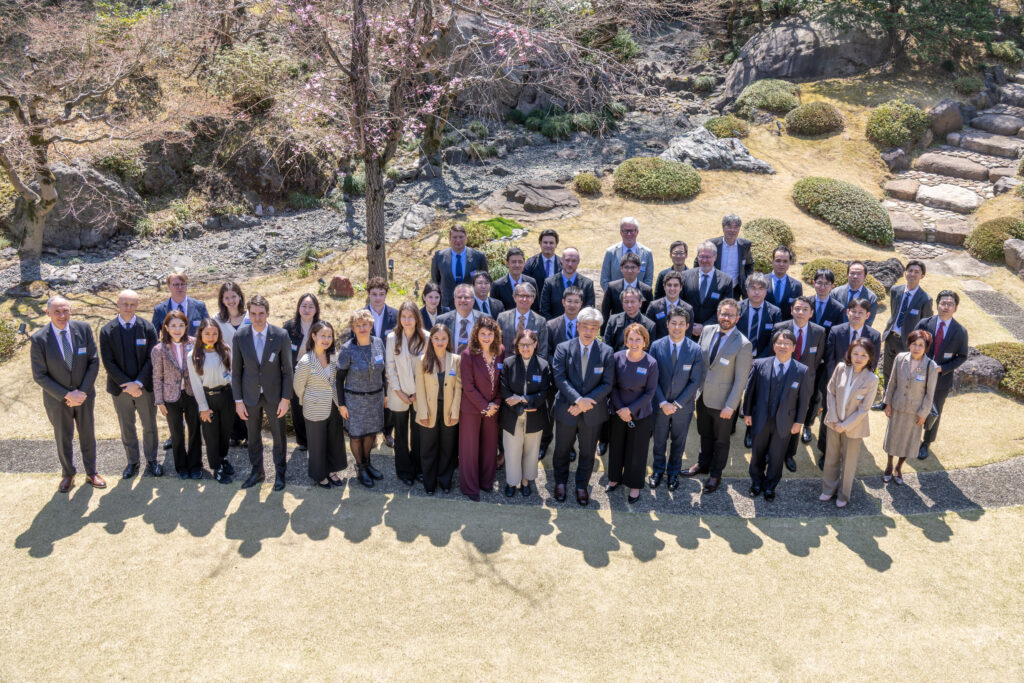
Participants noted that some European companies are already working with Japanese partners in Southeast Asia to develop alternatives to offerings from so-called high-risk vendors, with one immediate idea being to jointly target African markets through smart agriculture solutions. A key insight was the value of combining both horizontal and vertical approaches, while emphasizing the critical role of standards—particularly in enabling joint EU–Japan technology offerings. It was widely acknowledged that Europe and Japan are mutually dependent in completing supply chains and assembling competitive technology solutions for third markets, making close collaboration essential. Funding mechanisms, such as the Japan ICT Fund, were identified as important enablers for implementation, alongside strong dialogue between industry and the public sector. Private sector commitment, in particular, was seen as decisive in advancing joint initiatives, while there also appears to be scope for coordinated public-side programming. An open question remains regarding how proactive the private sector should be in shaping these efforts. As a practical next step, it was suggested that the European side articulate a clear strategic focus on Africa as a priority region and then identify viable joint technology offerings to pursue collaboratively.
EU-Japan AI4Good cooperation: “HPC scientific exchange for climate and health”
The session highlighted the strong complementarity between Europe and Japan in High Performance Computing anchored in flagship systems such as Fugaku (RIKEN), JUPITER (Jülich), and the NAISS Nordic infrastructure, and stressed that sustained cooperation between these ecosystems is both timely and strategically important. These HPC platforms are already enabling AI-driven advances in climate, health, and urban sustainability, with clear potential to scale into joint AI4Good initiatives aligned with key UN SDGs, particularly climate action, health, and sustainable cities. Participants underscored opportunities in AI4Climate and AI4Health, where combined computing power, shared datasets, and interoperable frameworks could significantly enhance policy-relevant climate modelling and accelerate biomedical research. A key outcome was the shared need for an operational EU–Japan framework for Fugaku–JUPITER cooperation, with NAISS acting as a bridge, supported by joint calls, coordinated programmes, and shared access mechanisms. The main recommendation is to formalise a structured, well-resourced HPC cooperation mechanism under AI4Good, with simplified collaboration procedures, stronger researcher mobility, and pilot projects as an immediate first step.
Japan’s Association to Horizon Europe: New Opportunities to Enhance
Japan’s association marks a structural upgrade in EU–Japan R&I relations, shifting from project-based cooperation to a more integrated partnership where Japanese entities can also lead projects, supporting more balanced collaboration. EU and Japanese research priorities are strongly aligned, especially on climate change, digital transformation, and economic resilience, making Horizon Europe’s mission-driven approach a good fit. However, increasing awareness and capacity-building around Horizon Europe rules and application processes in Japan remains essential, with National Contact Points and outreach playing a key role. Stakeholders also stressed the need to build on past EU framework programme collaborations to scale future joint projects, along with practical success factors that support effective participation.
ICT Stakeholder Roundtable
The round table covered a wide range of topics, showcasing rich innovation and research from both sides. Discussions highlighted strong synergies and complementarities with clear potential for further collaboration, particularly in the context of Japan’s association to Horizon Europe. AI and optical technologies stood out as key areas where Europe and Japan have strong, complementary expertise.
The EU-Japan ICT Stakeholder Roundtable also stressed the strategic value of trusted cooperation on next-generation connectivity, focusing on 5G/6G, AI, quantum technologies, and non-terrestrial networks. Participants highlighted a shift toward AI-native, decentralised, and sustainable network architectures as key priorities for joint R&D and standardisation. Three main pillars for cooperation were identified: research collaboration, standardisation, and joint demonstrations including digital twin initiatives. The event reinforced a shared ambition for long-term EU-Japan cooperation in advancing emerging technologies over the next decade.
Panel: “Leveraging Digital and Tech Diplomacy: Opportunities for a new partnership between Europe and the Indo-Pacific?”
The session highlighted several policy-relevant insights for strengthening EU–Japan cooperation in the Indo-Pacific, notably the growing importance of tech diplomacy as a core foreign policy tool to shape global digital rules and standards, and the need to close the gap between rapid innovation and slower regulatory processes through more anticipatory, forward-looking governance. It stressed the value of “managed interdependence” built on resilient and trusted supply chains, alongside stronger EU–Japan coordination in international standard-setting to promote interoperable and values-based frameworks. The partnership should also expand its global role by offering transparent technological alternatives to third countries, deepen joint research and innovation in areas like AI, semiconductors, quantum and green technologies, and adopt more inclusive, multi-stakeholder governance involving industry, academia, and civil society. Finally, extending cooperation networks across the Indo-Pacific was identified as key to amplifying impact and strengthening regional digital resilience.
Advancing EU-Japan Digital Cooperation: Next Steps
A central lesson from the 2nd EU-Japan digital week is the need to prioritise pilot projects and practical use cases over abstract discussions. The EU-Japan Hackathon clearly demonstrated this shift, proving that interoperability between European and Indo-Pacific digital public infrastructures is no longer just a research question, but a practical governance challenge. Teams successfully integrated production-grade components across jurisdictions, underscoring that shared certification frameworks, harmonised trust registries, and sustained multi-stakeholder coordination are critical next steps to scale these innovations.
However, significant structural hurdles remain. Regulatory fragmentation, complex governance, and limited access to data and research resources were consistently identified as primary bottlenecks slowing down joint initiatives. To overcome these barriers, experts recommend lightening cooperation mechanisms to reduce bureaucratic friction and actively expanding industry participation. While academic ties between the regions are robust, engaging the private sector—especially SMEs—as “co-architects” of governance frameworks is essential for sustainable progress. The current geopolitical landscape also demands a strategy of “managed interdependence”. Rather than pursuing full technological independence, Europe and Japan are encouraged to build resilient, reciprocal partnerships that reduce high-risk supply chain dependencies. This includes collaborating on international standard-setting for critical dual-use technologies like AI, 6G, semiconductors, and quantum computing to ensure open, interoperable, and values-based global frameworks.
Furthermore, the partnership aims to expand its global footprint by combining European and Japanese technological strengths to address third markets. Stakeholders highlighted the potential of jointly offering trusted tech solutions to emerging economies, specifically identifying Africa as a strategic priority for collaborative digital infrastructure and smart agriculture solutions. Finally, Japan’s recent association to Horizon Europe marks a structural upgrade in the relationship, shifting from ad-hoc projects to a deeply integrated, systemic partnership. To fully leverage this milestone, policymakers recommend increasing outreach to Japanese entities, aligning funding priorities, and establishing long-term collaboration frameworks to tackle global challenges in climate, health, and economic security.
About INPACE
INPACE is a Coordination and Support Action Project funded by the European Commission’s Horizon Europe Programme starting January 2024 and running until June 2027. INPACE’s mission is to support the implementation of the Digital Partnerships between the European Union and Japan, South Korea, Singapore, as well as the Trade and Technology Council with India. Powered by a consortium of 21 European and Asian partners, the project establishes a multi-stakeholder Hub for collaboration in digital technologies between Europe and the Indo-Pacific region and fosters long-term cooperation in key digital technologies by bringing together experts and stakeholders from both regions.