
2-3 November 2026
On-site event at South Asian University, New Delhi
Organised by
INPACE, C-DAC, IIT Guwahati

EU-India Digital
Cooperation

ADD TO CALENDAR

EU-India
Digital Cooperation
Conference 2026

ADD TO CALENDAR

2-3 November 2026
On-site event at South Asian University, New Delhi
Organised by
INPACE, C-DAC, IIT Guwahati
Conference 2026, New Delhi

Driving cooperation in digital technologies and policies between the EU and India forward 

Download the slides and full report of the conference and watch the recording of the Opening Public Session.

Bringing together policy makers, researchers, innovators, and business leaders to discuss and advance the cooperation between the European Union and India in the field of digital technologies and their application.

D
H
M
S

AGENDA - DAY 1

AGENDA - DAY 2

AGENDA - DAY 1&2

About

The EU-India Digital Cooperation Conference will bring together policymakers, researchers, innovators, and business leaders to discuss and advance the cooperation between the European Union and India in the field of digital technologies and their application. It supports the Trade and Technology Council between the EU and India (Working Group 1 – Strategic Technologies, Digital Governance, and Digital Connectivity). This will be put into the broader context of the collaboration of the EU with the Indo-Pacific countries.  

Context and background

The conference is organised in the framework of INPACE, a Coordination and Support Action funded by the European Commission’s Horizon Europe Programme. INPACE supports the implementation of the Digital Partnerships between the European Union and Japan, South Korea, Singapore, as well as the Trade and Technology Council with India, fostering cooperation in digital technologies between Europe and the Indo-Pacific region. In this context, the conference brings together European and Indian stakeholders to exchange on shared digital priorities and explore opportunities for further cooperation in research and innovation.

Europe offers great opportunities for researchers and innovators from India and the whole Indo-Pacific region. The European Union’s Horizon Europe Research and Innovation Funding programme is one of the largest and broadest in the world and is open for collaboration with a large number of countries. Japan and the Republic of Korea are already associated with Horizon Europe and negotiations between the EU and India are under way. Moreover, organisations from low– and middle–income countries are entitled to apply for funding within the scope of calls for proposals. The programme funds a broad range of activities, from research scholarships and staff exchange to large-scale collaborative innovation projects that involve industry, end-users, researchers, and others. 

The EU-India Digital Cooperation Conference 2026 will discuss core digital technologies and opportunities for collaboration between the EU and the Indo-Pacific countries on the development of technologies and their applications as well as technology-related regulations and policies. The Conference will provide a forum for in-depth exchanges on possible cooperations already within the open calls for 2027 in the current Framework Programme of Horizon Europe but also for the next phase which will start in 2028. 

The conference will include a closed-door (upon invitation only) Policy Roundtable under the headline “From Agenda to Delivery: EU–India Digital Cooperation post-2026 Summit”.

Core topics of the 2026 EU-India Digital Cooperation Conference will be:

The EU-Indo-Pacific Digital Partnership Conference 2025 discussed core digital technologies and opportunities for collaboration between the EU and the Indo-Pacific countries on the development of technologies and their applications and technology-related regulations and policies.

About

The EU-India Digital Cooperation Conference will bring together policymakers, researchers, innovators, and business leaders to discuss and advance the cooperation between the European Union and India in the field of digital technologies and their application. It supports the Trade and Technology Council between the EU and India (Working Group 1 – Strategic Technologies, Digital Governance, and Digital Connectivity). This will be put into the broader context of the collaboration of the EU with the Indo-Pacific countries.

Context and background

The conference is organised in the framework of INPACE, a Coordination and Support Action funded by the European Commission’s Horizon Europe Programme. INPACE supports the implementation of the Digital Partnerships between the European Union and Japan, South Korea, Singapore, as well as the Trade and Technology Council with India, fostering cooperation in digital technologies between Europe and the Indo-Pacific region. In this context, the conference brings together European and Indian stakeholders to exchange on shared digital priorities and explore opportunities for further cooperation in research and innovation.

Europe offers great opportunities for researchers and innovators from India and the whole Indo-Pacific region. The European Union’s Horizon Europe Research and Innovation Funding programme is one of the largest and broadest in the world and is open for collaboration with a large number of countries. Japan and the Republic of Korea are already associated with Horizon Europe and negotiations between the EU and India are under way. Moreover, organisations from low- and middle-income countries are entitled to apply for funding within the scope of calls for proposals. The programme funds a broad range of activities, from research scholarships and staff exchange to large-scale collaborative innovation projects that involve industry, end-users, researchers, and others.

The EU-India Digital Cooperation Conference 2026 will discuss core digital technologies and opportunities for collaboration between the EU and the Indo-Pacific countries on the development of technologies and their applications as well as technology-related regulations and policies. The Conference will provide a forum for in-depth exchanges on possible cooperations already within the open calls for 2027 in the current Framework Programme of Horizon Europe but also for the next phase which will start in 2028.

Core topics of the 2026 EU-India Digital Cooperation Conference will be:

2026 EU-India Digital Cooperation Conference
Technical Themes

Digital Trust and Digital Innovation

Digital Public Infrastructure

Artificial Intelligence, including data sharing

Semiconductors & Quantum Technologies

6G

High-Performance Computing and its connection to AI

Standardisation

Upskilling

Scaling of Technologies

The conference began with a high-level session on 28 October highlighting strategic priorities, shared interests, and concrete opportunities for strengthening cooperation between the EU and the Indo-Pacific in the digital domain.

Meet the

Conference Chairs

Dr. Sithu D. Sudarsan

C-DAC, Bangalore, India

Prof. Senthilmurugan Subbiah

IIT Guwahati, India

Senthilmurugan Subbiah

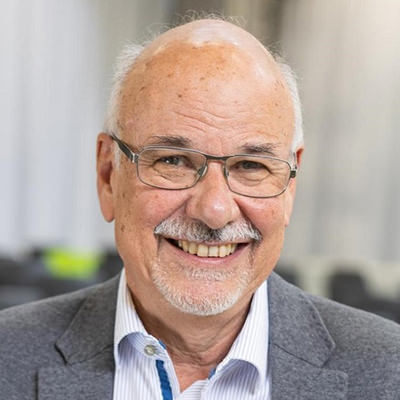
Prof. Sebastian Engell

ENRICH GLOBAL, TU Dortmund, Germany

Sebastian Engell

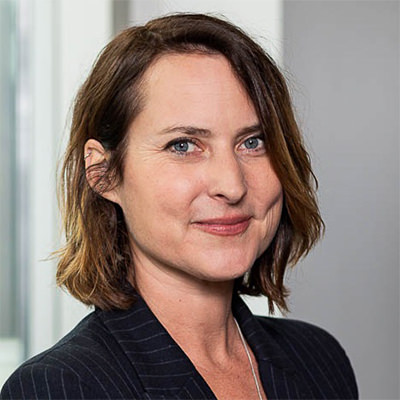
Prof. Eva Pejsova

Vrije Universiteit Brussel, Belgium

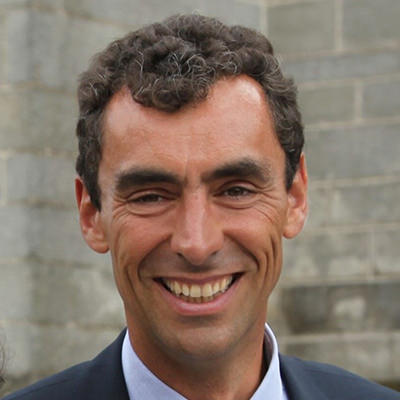
Dr. Franck Le Gall

EGM, France

Dr. Franck Le Gall

Prof. Sebastian Engell

TU Dortmund, Germany

Sebastian Engell

Prof. Eva Pejsova

Vrije Universiteit Brussel, Belgium

Prof. Shuzhi Sam Ge

National University of Singapore

Dr. Franck Le Gall

EGM, France

Dr. Franck Le Gall

Meet the

Chief Guest
Prof. Ashok Jhunjhunwala, IIT Madras, India
Padma Shri Prof. Ashok Jhunjhunwala
IIT Madras, India

Check the

Agenda

09:30 – 10:00

Registration and Welcome Coffee

10.00 – 12.30

PARALLEL SESSIONS

10.00 – 12.30 

BREAKOUT SESSION 1: Closed-Door Policy Workshop – From Agenda to Delivery: EU–India Digital Cooperation post-2026 Summit

Organisers

  • Dr. Eva Pejsova, Centre for Security, Diplomacy and Strategy (CSDS), Brussels School of Governance (BSoG), Vrije Universiteit Brussel (VUB), Belgium
  • Jhalak Kakkar, Centre for Communication Governance, NLU Delhi, India 

  • Dr. Sithu D. Sudarsan, C-DAC, India

Summary

The EU–India relationship has never been more developed. The last EU–India Summit placed technology at the centre of a Joint Comprehensive Strategic Agenda to 2030 and reaffirmed the Trade and Technology Council as the cornerstone of the partnership. This workshop examines two digital workstreams where near-term delivery appears both feasible and strategically consequential. Evaluation methodologies, testing, standards and transparency documentation all offer scope for two distinct regimes to develop a common working interface. Digital public infrastructure enjoys broader political support but poses more demanding technical questions. Convened under the Chatham House Rule, the workshop brings together a select group of senior experts, officials, regulators, and industry practitioners, aiming to advance the debate in New Delhi and Brussels and propose concrete policy recommendations.

10:00 – 10:05

Welcome Remarks

Speaker

  • Dr. Eva Pejsova, CSDS, Belgium

10:05 – 10:30

Opening Remarks

Speakers

  • Jhalak Kakkar, Centre for Communication Governance, NLU Delhi, India
  • Veronika Liskova, Delegation of the European Union to India and Bhutan
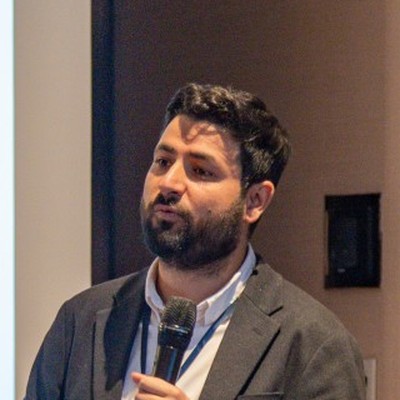
  • Dr. Sithu D. Sudarsan, C-DAC, India

10:30 – 11:30

Session I – Digital Public Infrastructure: Interoperable by Design

Moderator

  • Dr. Eva Pejsova, CSDS, Belgium


SPEAKERS

  • Smriti Parsheera, India

  • Dr. Balaji Rajendran, C-DAC, India

  • Chloe Teevan, ECDPM, Netherlands

11:30 – 12:30

Session II – Trusted AI: From Frameworks to Joint Practice

Moderator

  • Joanne D’Cunha, CCG, India

Speakers

  • Dr. Raluca Csernatoni, CSDS, Brussels School of Governance, Carnegie Europe, Belgium

10.00 – 12.30

BREAKOUT SESSION 2: Semiconductors / Microelectronics – Day 1

Organisers

  • Dr. Francis Balestra, SINANO Institute, France
Francis Balestra
  • Vivian Desalphine, C-DAC, India

Summary

The semiconductor world is rapidly changing, and this brings along challenges for Europe and all other leading semiconductor countries in the world. The mission of the European project INPACE is to identify the needs and opportunities for international collaboration in this changing ecosystem.

International cooperation is indeed key for speeding up technological innovation, reducing cost by avoiding duplicated research, strengthening complex semiconductor value chains, knowledge exchange, manage risks due to the turbulent geopolitical context, overcoming gaps in standardisation and skill shortage, and is encouraged by the new strategies of many semiconductor countries and is one of the objectives of the EU Chips Act 1 & 2.

The aim of this event is to strengthen bilateral cooperation between India and EU in important areas for future electronics systems and economic resilience, including technology challenges and possible solutions for advanced computing and advanced functionalities, value chains, manufacturing, industrial ecosystems, missing standards, and skill shortage.

The Semiconductors / Microelectronics sessions will focus in particular on the following topics of common interest between EU and India: Neuromorphic Computing, Power Devices, Sensing, Advanced Materials, Manufacturing and Upskilling.

10:00 – 10:25

Manufacturing, Value Chain, Technologies & Skills

Speaker

  • Francis Balestra, SiNANO Institute / CNRS, France

10:25 – 10:50

Chips2systems (C2S)

Speaker

  • Vivian Desalphine, C-DAC, India

10:50 – 11:15

Importance of Workforce Development & Heterogeneous Integration Technology for India’s Semiconductor Industry

Speaker

  • Dr. Shankara Prasad, Indian Institute of Technology Guwahati, India

11:15 – 11:40

Wide Band Gap devices for power applications

Speaker

  • Enrico Sangiorgi, University of Bologna, Italy 

11:40 – 12:05

Physics-based SPICE modeling framework for e-Mode power GaN technology facilitating automotive and data-center power electronics

Speaker

  • Sheikh Aamir Ahsan, National Institute of Technology Srinagar, India 

12:05 – 12:30

2D Materials for resistive memories: simulations and perspectives

Speaker

  • Alessandro Cresti, CNRS, France 

10.00 – 12.30

BREAKOUT SESSION 3: 6G Innovation

Organiser

  • Pooja Mohnani, EURESCOM, Germany
Pooja Mohnani

Summary

6G communication is another priority both in India and in the European Union. There is a great interest from the industry to collaborate and align, exemplified by the recent SNS JU call HORIZON-JU-SNS-2026-STREAM-CSA-03 that is expected to yield an action operating from the beginning of 2027.

The session will provide a forum for key stakeholders from Europe and India to exchange views on priorities and explore interests for potential joint, collaborative efforts in research and innovation, as well as industrial collaboration.

10:00 – 10:05

Welcome, Introduction & session agenda

Speaker

  • Pooja Mohnani, EURESCOM, Germany

10:05 – 11:25

Speaker Presentations

Speakers

  • Rowan Högman, Ericsson, India
  • Ajay Kumar Mittal, TSDSI, India 

  • Rajesh Kumar Pathak, Bharat 6G Alliance, India
  • Sahana Raghunandan, Fraunhofer-Institut für Integrierte Schaltungen IIS, Germany 

11:25 – 12:15

Panel discussion: “Advancing 6G Together: EU–India Priorities for Research, Innovation and Industrial Collaboration”

Moderator

  • Dr. Monique Calisti, Martel Innovate, Switzerland

Panelists

  • Rowan Högman, Ericsson, India
  • Rajesh Kumar Pathak, Bharat 6G Alliance, India
  • Sahana Raghunandan, Fraunhofer-Institut für Integrierte Schaltungen IIS, Germany 

  • Ajay Kumar Mittal, TSDSI, India 

12:15 – 12:30

Session summary and wrap-up

10.00 – 12.30

BREAKOUT SESSION 4: How Do We Build a Mobile, AI-Ready ICT Workforce Through EU-India Digital Cooperation?

Organisers

  • Karolina Gyurovszka, Martel Innovate, Switzerland
  • Ramesh Naidu Laveti, C-DAC, India
Ramesh Naidu Laveti

Summary

The mobility of skilled ICT professionals stands as a core cooperation priority for the EU and India under the Trade and Technology Council (TTC). Achieving seamless mobility requires continuous upskilling to keep pace with rapid technological shifts, alongside a trusted cross-border credential recognition. But what additional policy, industry, and institutional mechanisms are needed to make this cooperation fully operational?

This session explores how the European Union and India can strategically align their digital upskilling strategies to address critical tech talent shortages. Key stakeholders will examine cross-border skill recognition, joint workforce development programs, and collaborative training frameworks in high-demand fields like AI, semiconductors, and 6G. Attendees will gain actionable insights on building resilient, future-ready talent ecosystems that drive shared economic growth and innovation across both regions.

Speakers:

  • Dr. Monique Calisti, Martel Innovate, Switzerland
  • Ramesh Naidu Laveti, C-DAC, India
  • Dr. Ramesh Sharma, Indira Gandhi National Open University, India
  • David Kupas, University of Debrecen, Hungary
  • Dr. Surabhi Singh, ICMPD, the European Legal Gateway Office, India
  • Preyansi Mani, Deutsche Gesellschaft für Internationale Zusammenarbeit (GIZ), India

10.00 – 12.30

BREAKOUT SESSION 5: Quantum Technologies: From Qubit Control to Atomic Quantum Systems

Organiser

  • Dr. Asvija B, C-DAC, India

Summary

This session will explore emerging quantum computing technologies from both engineering and experimental-physics perspectives. The session will bring together insights from superconducting-qubit characterization and control, and Rydberg-atom-based quantum systems, highlighting how advances in hardware, control, characterization and fundamental quantum science are shaping the path toward scalable quantum technologies.

The session brings together leading stakeholders from academia and industry to explore emerging quantum technologies, spanning superconducting qubits and Rydberg-atom-based quantum systems. It will provide participants with insights into the current state of quantum hardware, the challenges of scaling quantum systems, and the technological opportunities emerging across diverse quantum platforms.

Speakers:

  • From Quantum Computing to Quantum-Safe Communication: Building an Integrated Quantum Technology Ecosystem
    Dr. Asvija B, C-DAC, India
  • Superconducting qubits: characterization, calibration, control and scaling
    Vishal Chatrath, QuantrolOx, India
  • Rydberg atoms: experimental quantum systems and emerging applications
    Dr. Sanjukta Roy, Raman Research Institute, India

12.30 – 14.00

Lunch Break

14.00 – 16.00

INAUGURAL SESSION

14.00 – 16.00

Inaugural Session: Driving cooperation in digital technologies and policies between India and the EU forward

14:00 – 14:10

Welcome Address

Speakers

  • South Asian University
  • Dr. Svetlana Klessova, G.A.C. Group, INPACE

14:10 – 14:20

Opening Remarks

Speaker

  • Prof. Devendra Jalihal, IIT Guwahati, India

14:20 – 15:00

Keynote Addresses

Speakers

  • H.E. Jean-Eric Paquet, Delegation of the European Union to India
  • Dr. Shivkumar Kalyanaraman, Anusandhan National Research Foundation (ANRF), India

15:00 – 15:20

Chief Guest Address

Speaker

  • Prof. Ashok Jhunjhunwala, Padma Shri Awardee, IIT Madras, India

15:20 – 15:30

Vote of Thanks

Speaker

  • Dr. Sithu D. Sudarsan, C-DAC, India

15:30 – 16:00

Tea Break

16.00 – 17.30

PLENARY SESSION

16.00 – 17.30

Plenary Session | Digital Innovation and Trust: Balancing Security, Regulation and Growth in the EU and India

16:00 – 17:30

Panel discussion: “How can Europe and India accelerate digital innovation while building the trust, security, and regulatory safeguards needed for technologies to scale?”

Moderator

  • Dr. Eva Pejsova, CSDS, Belgium

Speakers

  • Padma Shri Prof. Ashok Jhunjhunwala, IIT Madras, India
  • Chloe Teevan, ECDPM, Netherlands
  • Oezlem Buran, Deutsche Gesellschaft für Internationale Zusammenarbeit (GIZ), India
  • Harsha Lingam, Global Business Inroads (GBI), India 

17:30 Reception

09.00 – 09.30

Arrival and Coffee

09.30 – 11.45

PARALLEL SESSIONS

09.30 – 11.45

BREAKOUT SESSION 6: How Can Europe and India Shape the Next Era of HPC and AI Together?

Organiser

  • Dr. Rossen Apostolov, Sweden AI Factory, Sweden

Summary

High-performance computing and artificial intelligence are rapidly converging, transforming how we approach scientific discovery, industrial innovation, and some of society’s most complex challenges. Europe and India are both making major investments in advanced computing and AI capabilities, creating an opportunity to move from parallel developments toward deeper and more strategic cooperation.

This session will explore the evolving convergence of HPC and AI and the opportunities it creates for EU–India collaboration. Building on the experience and networks developed through GANANA, speakers will discuss advances in computing infrastructure, AI-enabled science and engineering, joint research and innovation, and the value of connecting European and Indian HPC and AI ecosystems. The concluding panel will look beyond current projects and identify concrete priorities and mechanisms for the next phase of EU–India cooperation, with the goal of turning successful project-based collaboration into a sustained partnership in advanced computing and AI.

09:30 – 09:40

Welcome, Introduction & Session Agenda

Speaker

  • Dr. Rossen Apostolov, Sweden AI Factory, Sweden

09:40 – 11:00

Speaker Presentations

Speakers

  • Dr. Manoj K Khare, C-DAC, India
  • Dr. Rossen Apostolov, Sweden AI Factory, Sweden
  • Dr. Uddhavesh Sonavane, C-DAC, India
  • Dr. Yogesh Kumar Singh, C-DAC, India

11:00 – 11:45

Panel discussion: “Priorities and mechanisms for the next phase of EU–India cooperation in HPC and AI”

Moderator

  • Dr. Vinod Jani, C-DAC, India

Speakers

  • Dr. Manoj K Khare, C-DAC, India
  • Dr. Uddhavesh Sonavane, C-DAC, India
  • Dr. Yogesh Kumar Singh, C-DAC, India

09.30 – 11.45

BREAKOUT SESSION 7: Data Sharing between Europe and India for the Purpose of CROSS-REGIONAL Services IN HEALTH CARE

Organisers

  • Dr. Antonis Ramfos, Athens Technology Center, Greece
Antonis Ramfos
  • Dr. Franck Le Gall, EGM, France

Summary

EU and India share similar challenges when it comes to data management and data sharing in the healthcare domain. European citizens, as India citizens, need to share health-related information when moving data across member states, while researchers need to access data from different geographies to complement research studies and optimise AI models. In support to the above, India implements the Indian Health Data Space (HDS) framework – built via the Ayushman Bharat Digital Mission (ABDM), while Europe implements the European Health Data Space (EHDS). Both health data exchange infrastructures share an identical foundational philosophy: federated architecture with patient-centric consent. However, their underlying architectural triggers, legal mechanisms, and implementation scales are fundamentally different. While India treats health data as an API-first Digital Public Infrastructure (DPI) designed to rapidly bridge developmental gaps, the European Union structures its health data exchange systems around Regulatory Standardization and strict legal compliance for cross-border integration.  

The overall objective of the session is to help European and Indian researchers understand the architecture, governance structures, and functional rules of these two health data space approaches and discuss the potentiality of data sharing between Europe and India to support cross-regional services in healthcare.  

The expected outcome of the workshop is to identify research questions that benefit from cross-regional comparison, connect the relevant scientific and industrial communities, and prepare joint experiments and research directions that can continue through future European and Indian programmes. Possible unresolved questions of potential joint research include how to exchange data securely without common governance structures; establish trust across the two heterogeneous structural designs, (i.e., data spaces and digital public infrastructures); preserve provenance, accountability and data quality in automated agentic environments; and support innovation while respecting sovereignty, privacy and regulatory differences. 

Speakers:

  • Saurav Baidya, Philips, BDVA, The Netherlands
  • Ramesh Naidu Laveti, C-DAC, India
  • Ashok Krishnan, Centre of Data for Public Good, IISc, India
  • Dr. Lekansh Shukla, NIMHANS, India
    Europe-India data sharing for the advancement of cross-regional healthcare initiatives
  • David Kupas, University of Debrecen, Hungary 

09.30 – 11.45

BREAKOUT SESSION 8: Semiconductors / Microelectronics – Day 2

Organiser

  • Dr. Francis Balestra, SINANO Institute, France
Francis Balestra

Summary

The semiconductor world is rapidly changing, and this brings along challenges for Europe and all other leading semiconductor countries in the world. The mission of the European project INPACE is to identify the needs and opportunities for international collaboration in this changing ecosystem.

International cooperation is indeed key for speeding up technological innovation, reducing cost by avoiding duplicated research, strengthening complex semiconductor value chains, knowledge exchange, manage risks due to the turbulent geopolitical context, overcoming gaps in standardisation and skill shortage, and is encouraged by the new strategies of many semiconductor countries and is one of the objectives of the EU Chips Act 1 & 2.

The aim of this event is to strengthen bilateral cooperation between India and EU in important areas for future electronics systems and economic resilience, including technology challenges and possible solutions for advanced computing and advanced functionalities, value chains, manufacturing, industrial ecosystems, missing standards, and skill shortage.

The Semiconductors / Microelectronics sessions will focus in particular on the following topics of common interest between EU and India: Neuromorphic Computing, Power Devices, Sensing, Advanced Materials, Manufacturing and Upskilling.

09:30 – 09:55

Neuromorphic Computing

Speaker

  • Sreetosh Goswami, Indian Institute of Science, India 

09:55 – 10:20

Ferroelectric-Material-Based Heterostructures as a Platform for Next-Generation Computing

Speaker

  • Sayani Majumdar, Tampere University, Finland 

10:20 – 10:45

Neuromorphic Computing using Spintronic Devices

Speaker

  • Arshid Nisar, National Institute of Technology Srinagar, India 

10:45 – 11:10

Smart Sensing

Speaker

  • Alan O’Riordan, Tyndall, Ireland

11:10 – 11:35

Smart Sensors

Speaker

  • Shiv Govind Singh, IIT Hyderabad, India 

11:35 – 11:45

Closing Remarks

Speaker

  • Francis Balestra, SiNANO Institute / CNRS, France

09.30 – 11.45

BREAKOUT SESSION 9: Digital Trust

Organisers

  • Pooja Mohnani, Eurescom, Germany
Pooja Mohnani
  • Dr. Balaji Rajendran, C-DAC, India
Dr. Balaji Rajendran

Summary

As Europe and India accelerate their digital transformation, digital trust is becoming a fundamental enabler of innovation, economic growth and cross-border digital cooperation. Building trustworthy digital ecosystems requires resilience and accountability of the infrastructures, data, services and supply chains on which they depend.  

This session will bring together stakeholders from Europe and India to explore on secure and trustworthy digital technologies and infrastructure. Discussions will address key dimensions of digital trust, including cybersecurity and resilience, data protection and trusted data sharing, digital identity, trustworthy AI, and the role of standards in strengthening confidence across interconnected digital ecosystems.  

The goal is to identify European and Indian priorities and points of convergences. The session will examine opportunities for closer collaboration across policy, research and innovation, industry and standardisation, while considering how trusted technologies and resilient supply chains can contribute to reducing critical dependencies and strengthening the robustness of the wider digital ecosystem. 

09:30 – 09:40

Welcome, Introduction & session agenda

Speakers

  • Pooja Mohnani, EURESCOM, Germany
  • Dr. Balaji Rajendran, C-DAC, India

09:40 – 10:55

Speaker Presentations

Speakers

  • From Policy to Practice: The Digital Product Passport as a Framework for EU-India Supply Chain Security
    Dr. Monique Calisti, Martel Innovate, Switzerland
  • From Silicon to Agents: reflecting the evolving trust landscape across the technology stack, from trusted hardware and cryptographic foundations to AI-driven autonomous agents.
    Dr. Balaji Rajendran, C-DAC, India
  • Preet Yadav, NXP, India

10:55 – 11:45

Panel: “Building Digital Trust Across Borders: Towards a Resilient and Trusted India–EU Digital Ecosystem”

Moderator

  • Pooja Mohnani, EURESCOM, Germany

Panelists

  • Dr. Monique Calisti, Martel Innovate, Switzerland
  • Dr. Balaji Rajendran, C-DAC, India
  • Preet Yadav, NXP, India
  • Sahana Raghunandan, Fraunhofer-Institut für Integrierte Schaltungen IIS, Germany

09.30 – 11.45

BREAKOUT SESSION 10: Deep Tech Innovation to Market Strategies, incl. AI Compliance and Regulatory Measures

Organiser

  • Dr. Vit Dockal, CIIRC CTU / INDRC, Czech Republic
Vit Dockal

Co-organiser

  • Prof. Senthilmurugan Subbiah, IIT Guwahati, India
Senthilmurugan Subbiah

Summary

The goal is to support connecting India’s deep-tech ecosystem with EU research, capital and markets, moving cooperation from networking to commercialization: The session will demonstrate pathways for Indian deep-tech ventures to move from research and technology development toward pilots, investment and EU market. It will present a model for supporting Indian deep tech firms to enter the European market in a cooperative setting.

09.30 – 09.50

Introduction of Speakers and Opening remarks

Beyond the Lab: The Distinctive Nature of Academic Deep-Tech Ventures

Speaker

  • Dr. Vit Dockal, CIIRC CTU / INDRC, Czech Republic

09.50 – 10.10

Tough Tech Doesn’t Need to Be Tough. Making Deep Technology Market Ready

Speaker

  • Filip Fingl, IPL Fund Ventures One, Czech Republic

10.10 – 10.30

CZACRA: Czech – IndoPacific Impact Accelerator. Case study of the Eurasia Innovation Corridor for Deep-Tech Ventures

Speaker

  • Lalit Patil, INDRC, Czech Republic

10.30 – 10.50

Case study on deep tech spin off 1

Speaker

  • Dip Nanda, RezLytix, India 

10.50 – 11.10

Case study on deep tech spin off 2

11.10 – 11.30

Closing remarks

11.30 – 11.45

Discussion

12.00 – 13.15

Plenary Session:
Convergence of HPC and AI – Perspectives from Europe and from India

Speaker

  • Dr. Rossen Apostolov, Sweden AI Factory, Sweden

Title

HPC, AI, and a Global Digital Partnership for the Exascale Era

Abstract

Supercomputing has become a truly global endeavour, bringing new opportunities alongside major challenges related to energy efficiency, portability, system complexity, and a growing skills gap. This keynote will explore the increasing convergence of High-Performance Computing (HPC) and Artificial Intelligence (AI), highlighting the need for deeper integration of AI capabilities into supercomputing infrastructures. It will also examine Europe’s AI strategy, the growing importance of secure and trusted computing environments for sensitive workloads, and the opportunities for strengthening EU–India collaboration in HPC and AI through initiatives such as GANANA and INPACE.

Speaker

  • Prof. Smruti Sarangi, IIT Delhi, India

Title

Building HPC Infrastructure from the Ground Up: Engineering, Scalability, and the Convergence with AI

Abstract

Building and operating a modern High-Performance Computing (HPC) facility involves challenges extending far beyond computing hardware. Drawing upon first-hand experience at IIT Delhi, this talk discusses the end-to-end process of establishing an institutional HPC facility, encompassing logistical, administrative, legal, and physical infrastructure challenges, as well as system architecture, software deployment, workload scheduling, and scalability benchmarking. It highlights practical lessons in building and managing HPC infrastructure and examines how the convergence of HPC and AI is reshaping requirements for resource management, performance, and scalability. Finally, the talk explores the future convergence of computer architecture, AI, and HPC, particularly the emergence of Physical AI, where intelligent systems interact with the physical world through simulation, perception, reasoning, and autonomous action, creating new demands on computing architectures and infrastructure.

13.15 – 14.15

Lunch Break

14.15 – 15.30

Working Sessions to discuss collaborations and joint projects (in parallel)

14.15 – 15.30

WORKING SESSION 1: Open-Door Exchange Room: Making INPACE Work for You

Organiser

  • Kseniia Savchenko, INPACE project manager, G.A.C. Group, France

Summary

This informal session will discuss the offers that INPACE makes to support collaborations between the EU and India: the INPACE Hub and how it can serve companies and initiatives, the Peer Advisory Network, and what else will INPACE leave in place once the project ends. The aim: turn INPACE into a concrete benefit for companies, projects and initiatives, and support joining forces where it pays off.

14.15 – 15.30

WORKING SESSION 2: Europe-India Cross-Regional Data Sharing

Organiser

  • Dr. Antonis Ramfos, Athens Technology Center, Greece
Antonis Ramfos

Summary

This informal session will bring together European and Indian researchers to brainstorm and define potential pilot projects that will enable cross-regional health care services through interoperation between the European and Indian approaches to health data spaces.

14.15 – 15.30

WORKING SESSION 3: Collaboration Opportunities on Semiconductors

Organiser

  • Dr. Francis Balestra, SINANO, France
Francis Balestra

Summary

The Cluster 4 Working Session will be devoted to discussing possible topics and instruments for future EU-India cooperation. The Session will cover the fields of common interest in India and Europe, as well as the best collaboration tools, including joint R&D&I projects, exchanges of students and researchers, joint Masters and PhDs, international training activities and Summer Schools, student internship, joint roadmapping, organisation of in-person and virtual Workshops for knowledge exchange and matchmaking, access to Research Infrastructures, standardisation needs for emerging technologies, cooperation in the semiconductor value chain, Position papers for future joint activities, and possible European and Indian funding.

14.15 – 15.30

WORKING SESSION 4: Europe-India Future Collaborations in HPC and AI

Organiser

  • Dr. Rossen Apostolov, Sweden AI Factory, National Academic Infrastructure for Supercomputing Sweden

Summary

This interactive session will provide a platform for European and Indian experts to discuss shared priorities in HPC and AI, identify areas of mutual interest, and develop concrete ideas for joint activities and long-term partnerships, building on existing EU–India cooperation.

14.15 – 15.30

WORKING SESSION 5: Experience with Joint EU-India Projects and New Ideas for Funding Support

Organisers

  • Prof. Sebastian Engell, TU Dortmund and Enrich Global, Germany
Sebastian Engell
  • Prof. Senthilmurugan Subbiah, IIT Guwahati and ANRF, India
Senthilmurugan Subbiah

Summary

This Working Session will discuss experiences with joint publicly funded projects between India and the EU, both wrt. proposal development and project execution, as well as proposals for new schemes. Both R&D collaboration and support for market access will be dealt with. It is not an information session on funding opportunities.

15.30 – 16.00

Coffee Break

16.00 – 17.15

Info Session: Funding Opportunities

16:00 – 16:15

Horizon Europe Funding

Speaker

  • Dr. Monique Calisti, Martel Innovate, Digital for Planet, Switzerland

16:15 – 16:30

EU-India Research Cooperation and Funding Opportunities under Horizon Europe

Speaker

  • Dr. Samrat S. Kumar, EURAXESS India

16:30 – 17:15

Panel: “From Funding Opportunities to Collaboration: Advancing EU-India Research and Innovation through Horizon Europe and Other Programmes”

Moderator

  • Dr. Svetlana Klessova, G.A.C Group, France

Panelists

  • Dr. Monique Calisti, Martel Innovate, Switzerland
  • Prof. Sebastian Engell, ENRICH GLOBAL, TU Dortmund, Germany
  • Dr. Antonis Ramfos, Athens Technology Center, Greece
  • Dr. Franck Le Gall, EGM, France
  • Pooja Mohnani, Eurescom, Germany

17.15 – 18.00

Closing session

Followed by a short reception and dinner upon invitation.

Technical

Workshops

How Can Europe and India Shape the Next Era of HPC and AI Together?

Organiser

Dr. Rossen Apostolov

Sweden AI Factory, Sweden

Summary

High-performance computing and artificial intelligence are rapidly converging, transforming how we approach scientific discovery, industrial innovation, and some of society’s most complex challenges. Europe and India are both making major investments in advanced computing and AI capabilities, creating an opportunity to move from parallel developments toward deeper and more strategic cooperation.

This session will explore the evolving convergence of HPC and AI and the opportunities it creates for EU–India collaboration. Building on the experience and networks developed through GANANA, speakers will discuss advances in computing infrastructure, AI-enabled science and engineering, joint research and innovation, and the value of connecting European and Indian HPC and AI ecosystems. The concluding panel will look beyond current projects and identify concrete priorities and mechanisms for the next phase of EU–India cooperation, with the goal of turning successful project-based collaboration into a sustained partnership in advanced computing and AI.

Organisers

Francis Balestra

Dr. Francis Balestra

SINANO, France

Vivian Desalphine

C-DAC, India

Summary

The semiconductor world is rapidly changing, and this brings along challenges for Europe and all other leading semiconductor countries in the world. The mission of the European project INPACE is to identify the needs and opportunities for international collaboration in this changing ecosystem.

International cooperation is indeed key for speeding up technological innovation, reducing cost by avoiding duplicated research, strengthening complex semiconductor value chains, knowledge exchange, manage risks due to the turbulent geopolitical context, overcoming gaps in standardisation and skill shortage, and is encouraged by the new strategies of many semiconductor countries and is one of the objectives of the EU Chips Act 1 & 2.

The aim of this event is to strengthen bilateral cooperation between India and EU in important areas for future electronics systems and economic resilience, including technology challenges and possible solutions for advanced computing and advanced functionalities, value chains, manufacturing, industrial ecosystems, missing standards, and skill shortage.

The Semiconductors / Microelectronics sessions will focus in particular on the following topics of common interest between EU and India: Neuromorphic Computing, Power Devices, Sensing, Advanced Materials, Manufacturing and Upskilling.

Organisers

Antonis Ramfos

Dr. Antonis Ramfos

Athens Technology Center, Greece

Dr. Franck Le Gall

EGM, France

Summary

EU and India share similar challenges when it comes to data management and data sharing in the healthcare domain. European citizens, as India citizens, need to share health-related information when moving data across member states, while researchers need to access data from different geographies to complement research studies and optimise AI models. In support to the above, India implements the Indian Health Data Space (HDS) framework – built via the Ayushman Bharat Digital Mission (ABDM), while Europe implements the European Health Data Space (EHDS). Both health data exchange infrastructures share an identical foundational philosophy: federated architecture with patient-centric consent. However, their underlying architectural triggers, legal mechanisms, and implementation scales are fundamentally different. While India treats health data as an API-first Digital Public Infrastructure (DPI) designed to rapidly bridge developmental gaps, the European Union structures its health data exchange systems around Regulatory Standardization and strict legal compliance for cross-border integration.  

The overall objective of the session is to help European and Indian researchers understand the architecture, governance structures, and functional rules of these two health data space approaches and discuss the potentiality of data sharing between Europe and India to support cross-regional services in healthcare.  

The expected outcome of the workshop is to identify research questions that benefit from cross-regional comparison, connect the relevant scientific and industrial communities, and prepare joint experiments and research directions that can continue through future European and Indian programmes. Possible unresolved questions of potential joint research include how to exchange data securely without common governance structures; establish trust across the two heterogeneous structural designs, (i.e., data spaces and digital public infrastructures); preserve provenance, accountability and data quality in automated agentic environments; and support innovation while respecting sovereignty, privacy and regulatory differences. 

Organisers

Karolina Gyurovszka

Martel Innovate, Switzerland

Ramesh Naidu Laveti

Ramesh Naidu Laveti

C-DAC, India

Summary

The mobility of skilled ICT professionals stands as a core cooperation priority for the EU and India under the Trade and Technology Council (TTC). Achieving seamless mobility requires continuous upskilling to keep pace with rapid technological shifts, alongside a trusted cross-border credential recognition. But what additional policy, industry, and institutional mechanisms are needed to make this cooperation fully operational?

This session explores how the European Union and India can strategically align their digital upskilling strategies to address critical tech talent shortages. Key stakeholders will examine cross-border skill recognition, joint workforce development programs, and collaborative training frameworks in high-demand fields like AI, semiconductors, and 6G. Attendees will gain actionable insights on building resilient, future-ready talent ecosystems that drive shared economic growth and innovation across both regions.

Organisers

Pooja Mohnani

Pooja Mohnani

Eurescom, Germany

Dr. Balaji Rajendran

Dr. Balaji Rajendran

C-DAC, India

Summary

Digital Innovation is a top priority of both in the European Union and in India and it is one of the focus points of the European Union and India Trade and Technology Council (TTC) cooperation. Digital innovation relies on trust and security as its foundation. Indeed, trust and security are essential in today’s rather dynamic and turbulent political situation in any partnerships. Among others, trust and supply chain security are essential for the operation of businesses and their stability.

The session will explore how the European Union and India can align their digital trust and security strategies and specific activities to address critical issues and challenges in this domain. The ambition is to clearly identify actions that can be addressed immediately.

Organiser

Pooja Mohnani

Pooja Mohnani

Eurescom, Germany

Summary

6G communication is another priority both in India and in the European Union. There is a great interest from the industry to collaborate and align, exemplified by the recent SNS JU call HORIZON-JU-SNS-2026-STREAM-CSA-03 that is expected to yield an action operating from the beginning of 2027.

The session will provide a forum for key stakeholders from Europe and India to exchange views on priorities and explore interests for potential joint, collaborative efforts in research and innovation, as well as industrial collaboration.

Organiser

Dr. Asvija B

C-DAC, India

Summary

This session will explore emerging quantum computing technologies from both engineering and experimental-physics perspectives. The session will bring together insights from superconducting-qubit characterization and control, and Rydberg-atom-based quantum systems, highlighting how advances in hardware, control, characterization and fundamental quantum science are shaping the path toward scalable quantum technologies.

The session brings together leading stakeholders from academia and industry to explore emerging quantum technologies, spanning superconducting qubits and Rydberg-atom-based quantum systems. It will provide participants with insights into the current state of quantum hardware, the challenges of scaling quantum systems, and the technological opportunities emerging across diverse quantum platforms.

Organisers

Vit Dockal

Dr. Vit Dockal

CIIRC CTU / INDRC, Czech Republic

Senthilmurugan Subbiah

Prof. Senthilmurugan Subbiah

IIT Guwahati, India

Summary

The goal is to support connecting India’s deep-tech ecosystem with EU research, capital and markets, moving cooperation from networking to commercialization: The session will demonstrate pathways for Indian deep-tech ventures to move from research and technology development toward pilots, investment and EU market. It will present a model for supporting Indian deep tech firms to enter the European market in a cooperative setting.

Meet the

Speakers

JEP_Photo
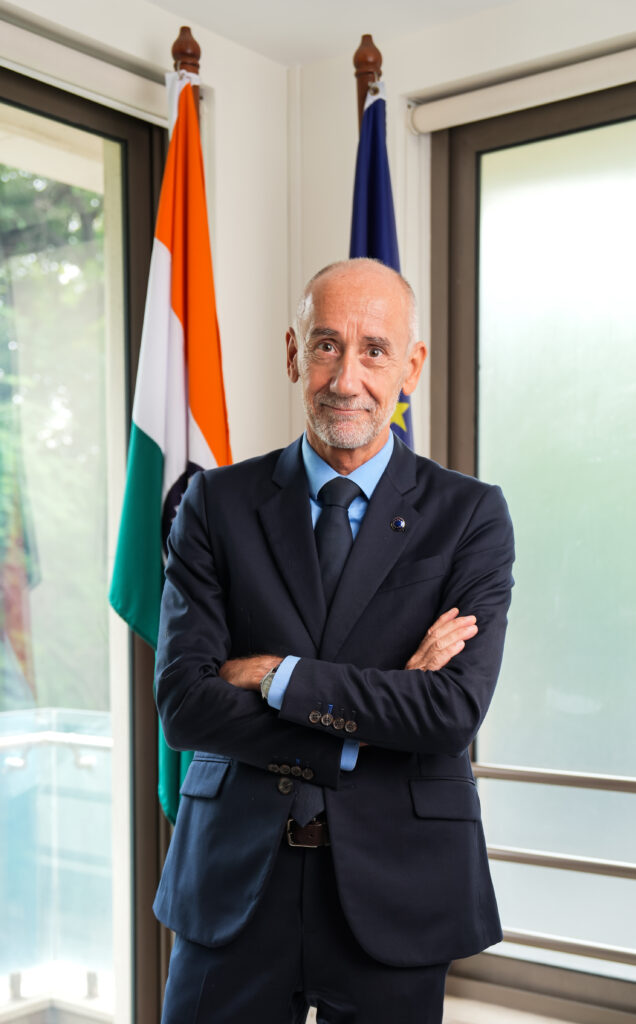
H.E. Jean-Eric Paquet
Ambassador, Delegation of the European Union to India
Sheikh-Aamir-Ahsan-colour
Sheikh Aamir Ahsan
National Institute of Technology Srinagar,
India
Asvija
Dr. Asvija B
C-DAC,
India
Francis Balestra
Dr. Francis Balestra
SiNANO Institute / CNRS,
France
WhatsApp Image 2025-12-30 at 08.05
Oezlem Buran
EU-India Digital Policy Dialogue, GIZ,
India 
Monique Calisti
Dr. Monique Calisti
Martel Innovate,
Switzerland
Mr. Vishal Chatrath
Vishal Chatrath
QuantrolOx,
India
Alessandro Cresti
Alessandro Cresti
CNRS,
France
Dr. Raluca Csernatonia
Dr. Raluca Csernatoni
CSDS-Brussels School of Governance / Carnegie Europe, Belgium
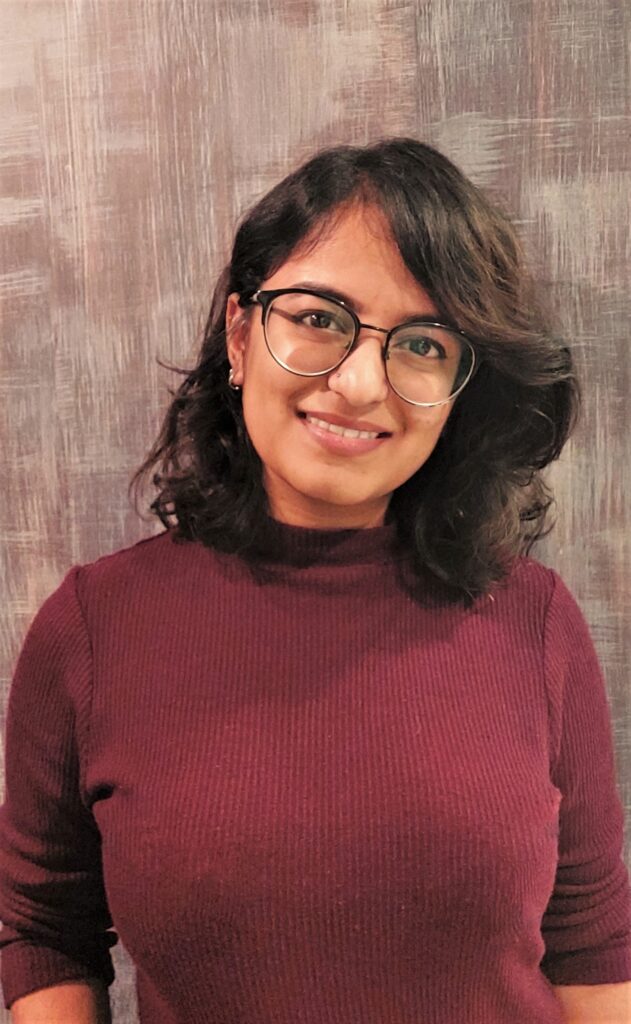
joanne-281
Joanne D’Cunha
CCG,
India
Vivian-Desalphine
Vivian Desalphine
C-DAC,
India
Karolina
Karolina Gyurovszka
Martel Innovate,
Switzerland
Rowan-Hogman
Rowan Högman
Ericsson,
India
Devendra-Jalihal
Prof. Devendra Jalihal
IIT Guwahati,
India
Prof. Ashok Jhunjhunwala, IIT Madras, India
Padma Shri Prof. Ashok Jhunjhunwala
IIT Madras,
India
Jhalak M
Jhalak Kakkar
NLU Delhi,
India
Shivkumar Kalyanaraman
Dr. Shivkumar Kalyanaraman
Anusandhan National Research Foundation (ANRF), India
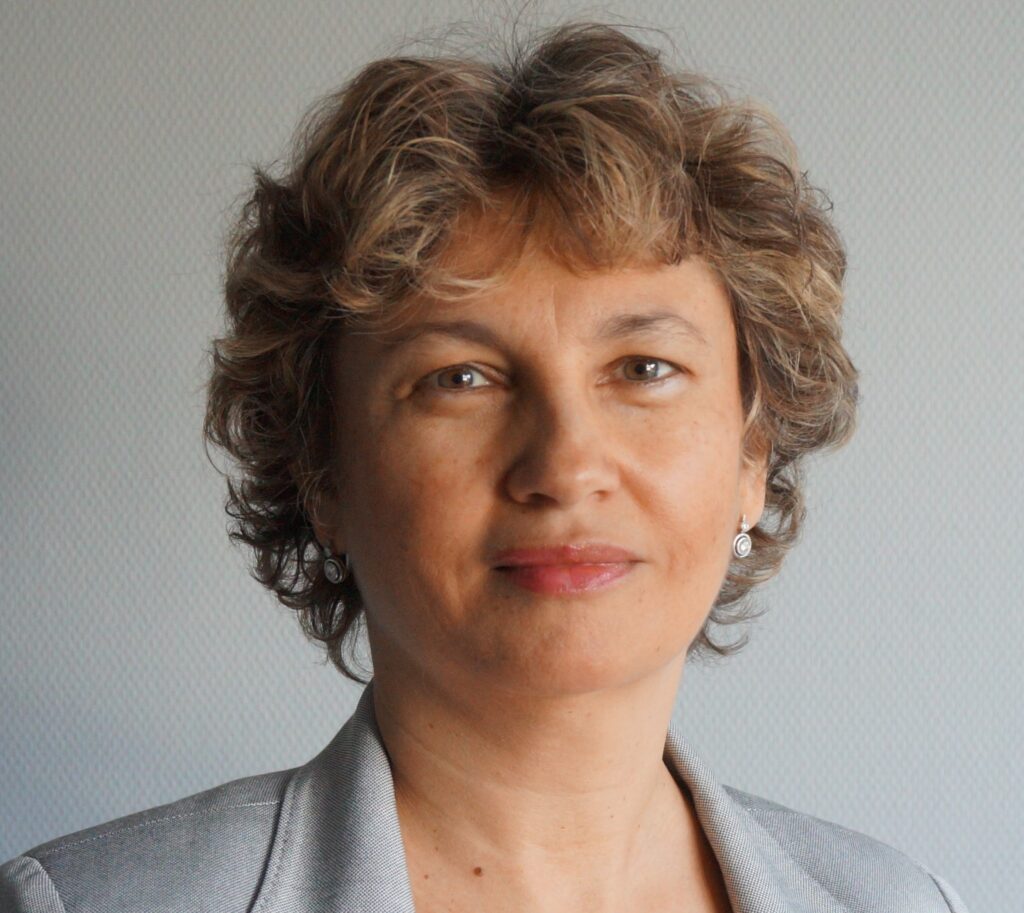
Svetlana-Klessova
Dr. Svetlana Klessova
G.A.C Group,
France
kupas_david_1
David Kupas
University of Debrecen,
Hungary
Ramesh Naidu Laveti
Ramesh Naidu Laveti
C-DAC,
India
Harsha_Lingam
Harsha Lingam
Global Business Inroads (GBI),
India
Photo_VLresized88
Veronika Liskova
Delegation of the European Union to India and Bhutan
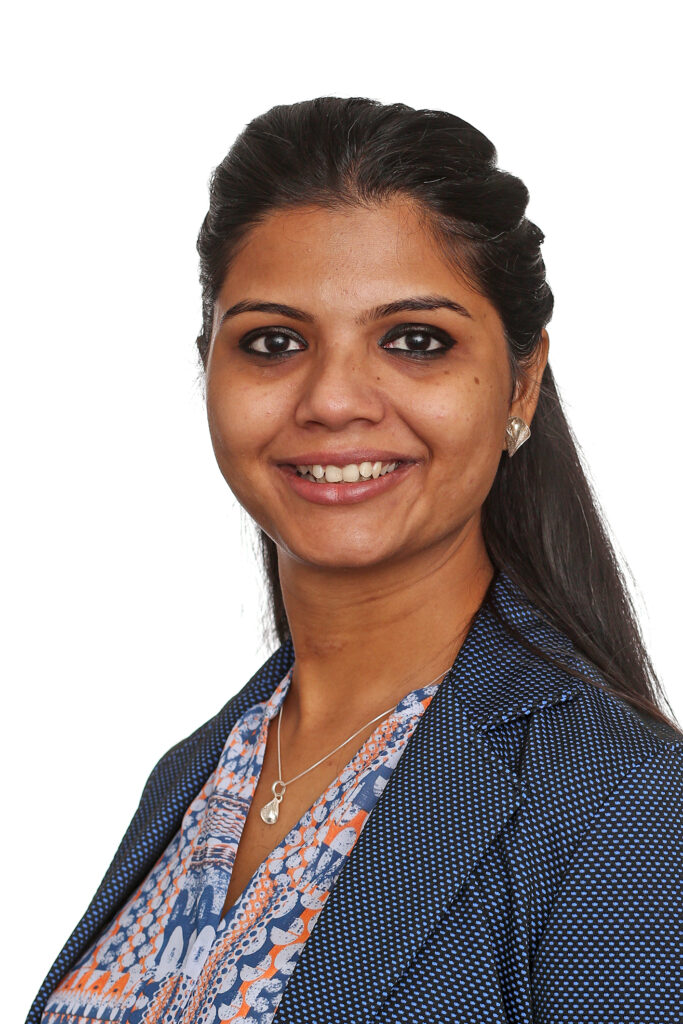
Mani_Preyansi (4)
Preyansi Mani
Deutsche Gesellschaft für Internationale Zusammenarbeit (GIZ),
India
Ajay Kumar Mittal
Ajay Kumar Mittal
TSDSI,
India
Pooja Mohnani
Pooja Mohnani
Eurescom,
Germany
Rajesh-Kumar-Pathak
Rajesh Kumar Pathak
Bharat 6G Alliance,
India
smriti_parsheera_pic
Smriti Parsheera

India
Eva-Pejsova
Dr. Eva Pejsova
CSDS /INPACE Policy Cluster lead,
Belgium
Shankara Prasad (1)
Dr. Shankara Prasad
Indian Institute of Technology Guwahati,
India
Sahana Raghunandan
Sahana Raghunandan
Fraunhofer-Institut für Integrierte Schaltungen IIS, Germany
Dr. Balaji Rajendran
C-DAC,
India
Sanjukta-Roy
Dr. Sanjukta Roy
Raman Research Institute,
India
Enrico Sangiorgi
Enrico Sangiorgi
University of Bologna,
Italy
Ramesh Sharma (1)
Dr. Ramesh Sharma
Indira Gandhi National Open University,
India
Surabhi
Dr. Surabhi Singh
ICMPD, the European Legal Gateway Office, India
Sithu D Sudarsan
Dr. Sithu D. Sudarsan
C-DAC Bangalore,
India
CTeevan_Photo
Chloe Teevan
ECDPM,
Netherlands

Rossen Apostolov
Dr. Rossen Apostolov
Sweden AI Factory,
Sweden
Saurav Baidya
Saurav Baidya
Philips, BDVA,
The Netherlands
Francis Balestra
Dr. Francis Balestra
SiNANO Institute / CNRS,
France
Monique Calisti
Dr. Monique Calisti
Martel Innovate,
Switzerland
Vit Dockal
Dr. Vit Dockal
CIIRC CTU / INDRC,
Czech Republic
Sebastian Engell
Prof. Sebastian Engell
ENRICH GLOBAL, TU Dortmund,
Germany
Filip Fingl
Filip Fingl
IPL Fund Ventures One,
Czech Republic
Sreetosh Goswami
Dr. Sreetosh Goswami
Indian Institute of Science,
India
Vinod-Jani
Dr. Vinod Jani
C-DAC,
India
Manoj-Khare-face
Dr. Manoj K Khare
C-DAC,
India
Svetlana-Klessova
Dr. Svetlana Klessova
INPACE project coordinator, G.A.C. Group,
France
Ashok Krishnan
Ashok Krishnan
Centre of Data for Public Good, IISc,
India
Samrat 2026
Dr. Samrat S. Kumar
EURAXESS India
kupas_david_1
David Kupas
University of Debrecen,
Hungary
Franck-Le-Gall_Final
Dr. Franck Le Gall
EGM,
France
Sayani Majumda
Dr. Sayani Majumdar
Tampere University,
Finland
Pooja Mohnani
Pooja Mohnani
Eurescom,
Germany
Ramesh Naidu Laveti
Ramesh Naidu Laveti
C-DAC,
India
Unknown
Dip Nanda
RezLytix,
India
Arshid Nisar
Dr. Arshid Nisar
National Institute of Technology Srinagar,
India
Alan O'Riordan
Alan O’Riordan
Tyndall National Institute,
Ireland
Lalit Patil
Lalit Patil
INDRC,
Czech Republic
Sahana Raghunandan
Sahana Raghunandan
Fraunhofer-Institut für Integrierte Schaltungen IIS, Germany
Dr. Balaji Rajendran
C-DAC,
India
Antonis Ramfos
Dr. Antonis Ramfos
Athens Technology Center,
Greece
Kseniia
Kseniia Savchenko
G.A.C. Group,
France
User comments
Dr. Lekansh Shukla
NIMHANS,
India
Smruti Sarangi
Prof. Smruti Sarangi
IIT Delhi,
India
Shiv-Govind-Singh
Shiv Govind Singh
IIT Hyderabad,
India
Yogesh-Kumar-Singh
Dr. Yogesh Kumar Singh
C-DAC,
India
Uddhavesh-Sonavane-photo
Dr. Uddhavesh Sonavane
C-DAC,
India
Senthilmurugan Subbiah
Prof. Senthilmurugan Subbiah
IIT Guwahati,
India
Preet Ydav
Preet Yadav
NXP
India

Meet the

Technical Committee
Svetlana-Klessova
Dr. Svetlana Klessova
INPACE Project Coordinator,
G.A.C. Group, France
Rossen Apostolov
Dr. Rossen Apostolov
Sweden AI Factory and National Academic Infrastructure for Supercomputing, Sweden
Francis Balestra
Dr. Francis Balestra
SiNANO Institute, France
Dr. Vit-Dockal
Dr. Vit Dockal
Czech Technical University in Prague, Czech Republic
Sebastian Engell
Prof. Sebastian Engell
TU Dortmund, Germany
Karolina
Karolina Gyurovszka
Martel Innovate, Switzerland
Yong Liu
Yong Liu
Deputy Department Director,
IHPC, A*Star, Singapore
Adam-KAPOVITS_f
Adam Kapovits
EURESCOM, Germany
Eva Pejsova
Eva Pejsova
Japan Chair,
Vrije Universiteit, Brussel, Belgium
Franck-Le-Gall_Final
Dr. Franck Le Gall
EGM, France
Pooja Mohnani
Pooja Mohnani
Eurescom, Germany
JaeSeung Song
JaeSeung Song
Professor,
Sejong University, South Korea
Antonis Ramfos
Dr. Antonis Ramfos
Athens Technology Center, Greece
Dr. Praveen Misra
Dr. Praveen Misra
South Asian University (SAU), India
Mr. Vishal Chatrath
Vishal Chatrath
QuantrolOx, India
Dr. Shankara K Prasad
Indian Institute of Technology (IIT) Guwahati, India
Prof. Srinath Srinivasa
International Institute of Information Technology, Bangalore (IIIT-B), India
Prof. Chester Rebeiro
Indian Institute of Technology (IIT) Madras, India
Mr. Preet Yadav
Preet Yadav
NXP Semiconductors, India
Dr. Sanjukta Roy
Dr. Sanjukta Roy
Raman Research Institute (RRI), India
Mr. Ramesh Naidu Laveti
Ramesh Naidu Laveti
Centre for Development of Advanced Computing, India
Senthilmurugan-Subbiah
Senthilmurugan Subbiah
Professor,
IIT Guwahati, India
Ken Uchida
Ken Uchida
Professor,
University of Tokyo, Japan
Yonggang We
Yonggang Wen
Professor,
Nanyang Technological University, Singapore
Marc Zeller
Marc Zeller
Research Professional,
Siemens Mobility, Germany

Meet the Speakers of INPACE Singapore's Conference 2025.

Meet the

Organising Committee
Shuzhi Sam Ge
Prof. Shuzhi Sam Ge
Chair of Organising Committee,
National University of Singapore
Anita Gojanovic
Anita Gojanovic
Community Building and Communication Expert,
Digital for Planet, Switzerland
Svetlana Klessova
Dr. Svetlana Klessova
INPACE Project Coordinator,
G.A.C. Group, France
Yuan-Min
Dr. Min Yuan
National University of Singapore
Organisers

Contact

Supporting Organisations

Venue
EU-India Digital Cooperation Conference 2026 - logo

EU-India Digital Cooperation Conference 2026